Healthcare AI Governance: Proof Before Autonomy Across Clinical and Operational Systems
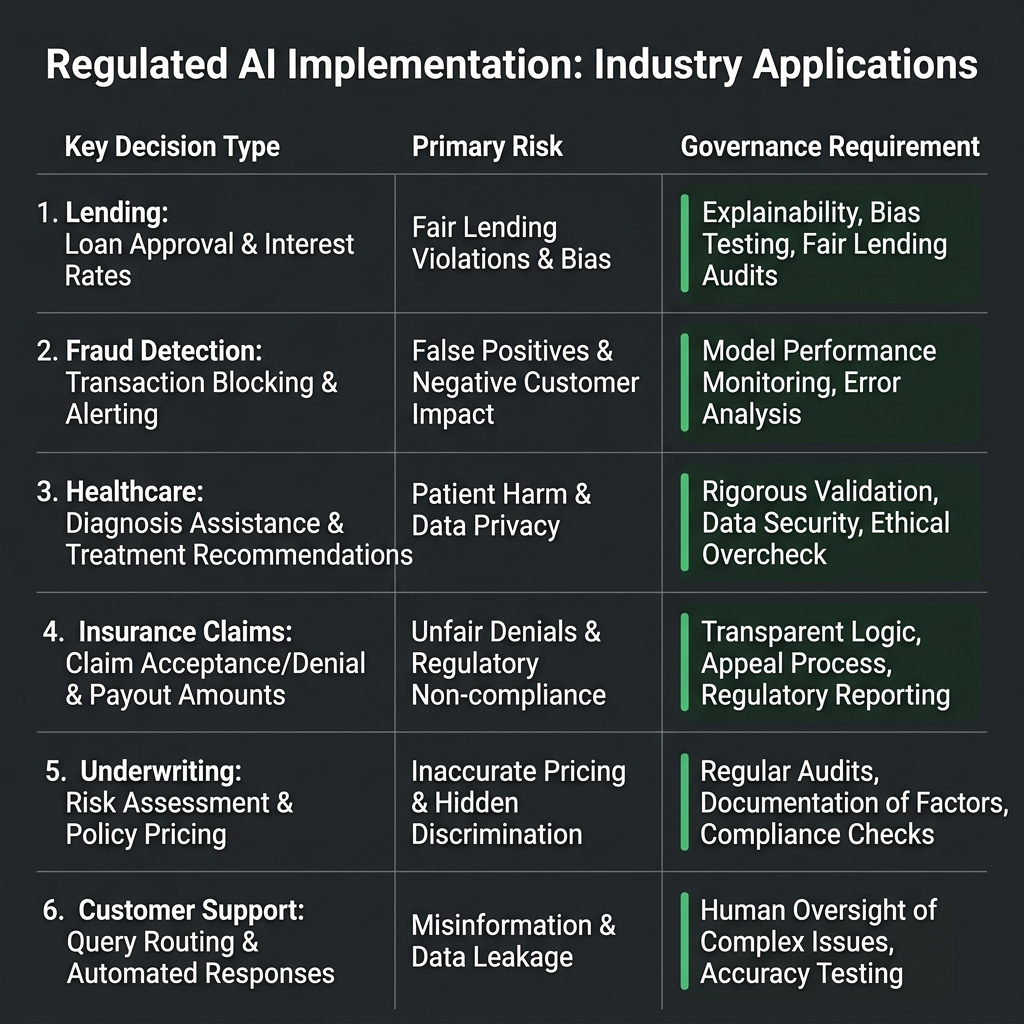
This post is part of the Regulated AI Implementation pillar and expands upon the behavioral envelope concepts introduced in The AI Roadmap That Cannot Be Finished.
The level of autonomy an AI system receives must be proportional to the evidence that its behavior is safe, effective, equitable, and controllable when it fails. Autonomy must be earned through proof rather than assumed through capability, and that proof must remain defensible throughout the production lifecycle.
1. Why Does Clinical AI Governance Start with Consequence Rather Than Technology?
Most healthcare AI governance frameworks stumble on a foundational error: they classify risk according to organizational department rather than decision consequence.
Under this conventional view, systems are divided into two rigid buckets:
- Clinical AI: Regarded as inherently high-risk, demanding maximal oversight.
- Operational AI: Regarded as administrative plumbing, subject only to standard enterprise IT controls.
This boundary is dangerous.
Governance intensity must follow the potential harm, degree of autonomy, and irreversibility of the decision, not the departmental label on the software license.
graph TD
    A[Healthcare AI Capability] --> B{Consequence & Reversibility Assessment}
    B -->|Direct Patient Impact| C[Clinical Workflows]
    B -->|Systemic Resource Impact| D[Operational Workflows]

    C --> E[Diagnostic Triage / Acute CDS]
    C --> F[Ambient Clinical Documentation]

    D --> G[Claims Adjudication & Prior Auth]
    D --> H[Shift Scheduling & Supply Routing]

    E -->|High Harm / Irreversible| I[Strict Evidence & Real-Time Controls]
    G -->|Delayed Care / Systemic Denial| I
    F -->|Low Harm / Reversible| J[Calibrated Oversight & Monitoring]
    H -->|Low Harm / Correctable| J

    style I fill:#2d1515,stroke:#e53e3e,stroke-width:2px,color:#fff
    style J fill:#15232d,stroke:#3182ce,stroke-width:2px,color:#fff
The Indirect Clinical Harm of Operational Algorithms
An operational AI system can cause clinical morbidity as decisively as a diagnostic model:
- Prior Authorization & Claims Adjudication: An algorithm that auto-rejects oncology pre-authorizations based on statistical cost-containment models directly delays chemotherapy, causing tumor progression.
- Patient Scheduling & Intake Triage: A scheduling model optimized purely for clinic capacity usage that systematically deprioritizes specific demographic cohorts or symptom profiles can delay cardiac interventions past the therapeutic window.
- Bed Allocation & Capacity Management: An inpatient placement algorithm that miscalculates ICU transfer risk starves deteriorating patients of intensive monitoring.
Conversely, not all clinical AI demands acute regulatory containment. An ambient documentation tool that drafts progress notes for physician review carries a vastly different risk profile than an autonomous closed-loop insulin infusion pump. Treating both identically under a blanket "clinical AI" mandate paralyzes low-risk clinical productivity while leaving operational hazards unmonitored.
Governance intensity should follow consequence and reversibility, not organizational labels. Operational AI can generate severe clinical harm through resource allocation and access delays.
2. How Do You Map Risk Against Autonomy in Healthcare AI?
To escape blunt categorizations, healthcare product leaders and clinical informaticists must evaluate AI systems across three distinct dimensions:
- Clinical Consequence: Can the system directly degrade patient health, misclassify disease, or induce physical harm?
- Operational Consequence: Can the system compromise patient access, withhold reimbursement, bias resource distribution, or create institutional liability?
- Decision Autonomy: Does the system passively observe, offer probabilistic recommendations, execute tasks subject to human review, or execute autonomously?
Mapping consequence against autonomy establishes the Healthcare Risk × Autonomy Governance Matrix:
| Consequence Level | Low Autonomy (Observe / Advise / Assist) | High Autonomy (Execute with Veto / Fully Autonomous) |
|---|---|---|
| Low Consequence (e.g., ambient note drafting, supply room stocking, visit transcription) |
Standard Product Governance • Periodic cohort sampling • Basic telemetry and logging • Standard user error reporting |
Lightweight Bounded Execution • Deterministic schema validation • Asynchronous administrative audit • Rule-governed fallback boundaries |
| Moderate Consequence (e.g., outpatient scheduling, diagnostic coding, standard CDS alerts) |
Supervised Clinical Validation • Clinician-in-the-loop review • Bias and subgroup parity testing • Alert fatigue tracking |
Bounded Execution with Tripwires • Explicit model contracts • Dynamic override logging • Automated circuit breakers |
| High Consequence (e.g., acute sepsis prediction, radiation planning, autonomous claims denials) |
Rigorous Oversight & Evidence • Mandatory independent clinical review • Prospective multi-site validation • Continuous drift surveillance |
Exceptional Evidence & Bounded Control • Pre-market regulatory clearance (SaMD) • Deterministic safety interlocks • Real-time human escalation paths |
The Re-anchored Default Principle
Rather than asserting that all clinical AI must default to Tier 0 (Observe and Suggest), the defensible architectural principle is:
For high-consequence healthcare decisions, human clinical judgment must remain the accountable decision authority unless the system's intended use, clinical validation, regulatory status, and operational controls explicitly justify a higher tier of autonomy.
This structure allows health systems to grant higher autonomy to administrative workflows with low clinical consequence while maintaining rigid, defensible boundaries around acute clinical interventions.
3. What Defines a Permitted Clinical Behavioral Envelope?
In The AI Roadmap That Cannot Be Finished, we established that probabilistic AI systems cannot be managed like deterministic software. They require continuous defense of an operational behavioral envelope.
In healthcare, this envelope is defined by three structural boundaries:
graph LR
    subgraph Execution Pipeline
        Input[Patient Context & EHR Data] --> Layer1[1. Hard Deterministic Constraints]
        Layer1 -->|Valid & In-Scope| Layer2[2. Probabilistic Inference Engine]
        Layer1 -->|Contraindication / Out-of-Scope| Fail[Deterministic Interlock / Fallback]
        Layer2 --> Layer3[3. Human Clinical Adjudication]
        Layer3 --> Action[Executed Clinical or Administrative Action]
    end

    style Layer1 fill:#1a365d,stroke:#2b6cb0,stroke-width:2px,color:#fff
    style Layer2 fill:#744210,stroke:#d69e2e,stroke-width:2px,color:#fff
    style Layer3 fill:#22543d,stroke:#38a169,stroke-width:2px,color:#fff
1. Hard Constraints (Deterministic Rules)
Boundary conditions that must never be negotiated by a probabilistic model:
- A patient with an anaphylactic beta-lactam allergy must not receive a recommendation for penicillin.
- An adult sepsis model must not execute inference on neonatal or pediatric records.
- A claims denial engine must not issue an adverse benefit determination without routing the case to a licensed physician reviewer.
2. Probabilistic Recommendations (Statistical Models)
Dynamic estimations generated within validated bounds:
- Estimating the probability of 48-hour clinical deterioration.
- Generating a prioritized differential diagnosis based on lab values and clinical notes.
- Predicting patient no-show likelihood to optimize scheduling buffers.
3. Clinical Judgment (Human Authority)
The accountable entity reconciling statistical inference with messy human reality:
- Balancing competing clinical risks (e.g., bleeding risk vs. stroke risk in anticoagulation).
- Assessing patient preferences, goals of care, and qualitative social determinants.
- Intervening when the model's recommendation conflicts with unmodeled clinical observations.
4. Why Must Hard Safety Constraints Be Enforced Outside the Model?
A recurring failure mode in healthcare AI system design is delegating safety constraints to the probabilistic model itself, such as instructing an LLM through system prompts to "never suggest contraindicated drugs."
Models do not understand safety invariants. They predict tokens based on statistical representations. When presented with out-of-distribution inputs, novel polypharmacy combinations, or adversarial context, prompt-based constraints degrade.
| Engine Component | Execution Scope | Safety & Governance Policy |
|---|---|---|
| 1. Input Interceptors | Schema, Freshness & Cohort Gates | Validate schema integrity, data freshness thresholds, and cohort eligibility before inference. |
| 2. Exclusion Filters | Absolute Contraindications & Warnings | Evaluate non-negotiable contraindications and black-box safety warnings deterministically. |
| 3. Model Inference | Bounded Probabilistic Prediction | Execute statistical model scoring strictly within validated behavioral bounds. |
| 4. Output Validators | Policy Verification & Telemetry | Verify bounded execution, enforce escalation tripwires, and log immutable traces. |
The Messy Reality of Clinical Data
Healthcare data is rarely pristine. In production EHR environments, safety rules run against incomplete, conflicting, and stale records:
- Allergy documentation is frequently incomplete, uncoded, or recorded in free-text clinical notes.
- Medication reconciliation is often days out of date during hospital admissions.
- Diagnostic codes (ICD-10) reflect billing incentives rather than real-time clinical physiology.
If a deterministic rule engine halts execution on every missing data point, clinical workflows grind to a halt, prompting clinicians to disable the safety system entirely.
Therefore, the architectural requirement is not absolute rule rigidity; it is governed exception handling:
- Hard Stops: Absolute, non-overridable execution blocks reserved for lethal, unequivocal contraindications (e.g., administering a known lethal drug interaction or operating an adult model on an infant).
- Soft Constraints with Documented Exception Paths: Alerts that allow clinician override, provided the clinician selects a structured justification (e.g., "Benefit outweighs risk; patient previously tolerated agent under desensitization protocol").
Safety constraints must be enforced deterministically outside the probabilistic model, supported by explicit protocols for clinical data ambiguity and documented exceptions.
5. How Does Human Cognitive Reality Break Down in Clinical AI Oversight?
Virtually every healthcare AI whitepaper claims that safety is assured because a "human is in the loop."
In practice, nominal human oversight is often an illusion.
Placing a busy clinician in front of a high-volume AI suggestion box does not produce safety. It produces two distinct cognitive failure modes: automation bias and alert fatigue.
graph TD
    A[AI Recommendation Presented to Clinician] --> B{Clinician Interaction}

    B -->|Passive Trust / High Workload| C[Automation Bias]
    C --> D[Superficial Rubber-Stamping]
    D --> E[Silent Clinical Failures Escape]

    B -->|High Frequency / Low Value| F[Alert Fatigue]
    F --> G[Reflexive Dismissal]
    G --> H[Actionable Warnings Ignored]

    B -->|Calibrated Friction / Evidence Display| I[Active Clinical Judgment]
    I --> J[Valid Clinical Action or Justified Override]

    style C fill:#4a154b,stroke:#9b51e0,stroke-width:2px,color:#fff
    style F fill:#4a154b,stroke:#9b51e0,stroke-width:2px,color:#fff
    style I fill:#1a365d,stroke:#3182ce,stroke-width:2px,color:#fff
1. Automation Bias: The Rubber-Stamp Risk
When an AI system presents a recommendation accompanied by high confidence scores (for example, "Sepsis Risk: 94% | Recommended Action: Broad Spectrum Antibiotics"), time-pressured clinicians naturally defer to the algorithm. The clinician ceases to exercise independent clinical review and acts as an administrative rubber stamp.
Product teams must engineer cognitive friction into the interface:
- Unanchored Clinical Review: In high-consequence workflows (such as radiology triage), present the imaging data and clinical context before revealing the AI's diagnostic proposal, preventing cognitive anchoring.
- Inspectable Evidence Attribution: Never present a raw probability score. Display the specific physiological inputs, lab trends, and temporal windows that drove the prediction.
- Randomized Audit Mechanisms: Route a statistically significant sample of cases to secondary human review without AI augmentation to establish baseline human diagnostic accuracy.
2. Alert Fatigue: The AI Intervention Burden
Healthcare systems are already saturated with clinical decision support alerts. Over 90% of conventional EHR drug-interaction alerts are overridden by clinicians, often reflexively. Introducing high-volume AI alerts exacerbates cognitive exhaustion.
AI governance must track Intervention Burden as a first-class operational metric:
| Telemetry Metric | Operational Definition | Clinical Risk Signal |
|---|---|---|
| Alert Volume per Shift | Total AI notifications received per clinician per 8-hour shift | Values exceeding cognitive capacity trigger reflexive dismissal across all alerts. |
| Actionable Alert Rate | Percentage of AI recommendations that result in a modified order or intervention | Rates below 20% indicate poor specificity and excessive workflow noise. |
| Dismissal Velocity (TTC) | Median time between alert presentation and clinician dismissal | Dismissal times under 1.5 seconds indicate blind overrides without cognitive evaluation. |
| Cognitive Review Latency | Time required for a clinician to synthesize AI inputs during complex decisions | Sudden drops in review latency correlate directly with automation bias. |
The Sensitivity–Specificity Tradeoff That Alert Governance Cannot Escape
Alert governance faces an irresolvable tension between the two intervention burden risks above.
Reducing alert volume to protect cognitive attention requires tightening specificity thresholds, which by definition reduces sensitivity. For low-frequency, high-consequence events (a rare fatal drug interaction or a deterioration pattern presenting in fewer than 1 in 1,000 admissions), the events the governance framework most wants to catch are precisely the ones sacrificed first when alert thresholds tighten to combat fatigue.
This tradeoff cannot be engineered away. It must be governed explicitly:
- High-consequence, low-frequency safety constraints: Contraindications, life-threatening interactions, and mandatory escalation triggers must execute as deterministic rules in Layer 3 (the hard constraint engine), not as model-scored alerts subject to sensitivity optimization.
- Probabilistic clinical suggestions: Deterioration predictions, differential rankings, and cohort risk scores are the appropriate domain of alert volume management, specificity tuning, and intervention burden controls.
The governance architecture resolves the tension by keeping these two alert categories in separate execution layers, not by adjusting a single sensitivity dial.
Three Operational Oversight Regimes
Governance policies must explicitly designate the operational relationship between the human and the machine:
- Human-in-the-Loop (HITL): The system cannot execute an order or transmit a communication without active, synchronous human authorization. Mandatory for high-consequence therapeutic recommendations.
- Human-on-the-Loop (HOTL): The system executes within bounded parameters while a human supervisor monitors operations asynchronously, possessing the authority and tooling to intervene or abort. Appropriate for operational scheduling, billing triage, and routine patient reminders.
- Human-out-of-the-Loop (HOOTL): Autonomous execution without human verification. Confined to deterministic, low-risk administrative workflows (e.g., syncing encounter metadata across databases).
6. What Is the 9-Layer Healthcare AI Governance Control Stack?
The central architectural thesis of healthcare AI governance is straightforward:
Autonomy should be earned, not assumed. Every increase in system autonomy requires verifiable empirical evidence that the model operates within its validated behavioral envelope.
To operationalize this principle, institutions must structure AI systems across the 9-Layer Healthcare Governance Control Stack:
| Control Stack Layer | Layer Name | Core Architecture & Control Function | Operational Artifact |
|---|---|---|---|
| Layer 9 | Longitudinal Outcomes & Equity Surveillance | Long-term patient morbidity, mortality, readmission, and demographic subgroup parity tracking. | Annual epidemiological audit report and disparity disparity curves. |
| Layer 8 | Intervention Protocols & Automated Circuit Breakers | Deterministic fail-safes that automatically downgrade autonomy tiers or disable degraded models. | Automated circuit-breaker daemon with PagerDuty escalation. |
| Layer 7 | Runtime Drift & Behavioral Telemetry | Continuous monitoring of input feature drift, calibration decay, and clinician review velocity. | Real-time Prometheus metrics on PSI and dismissal latency. |
| Layer 6 | Empirical Validation & Clinical Evidence | Prospective multi-site trials, local cohort calibration, and clinical utility proof against standard of care. | Pre-market validation dossier with local calibration plots. |
| Layer 5 | Human Oversight Architecture (HITL / HOTL) | Operational oversight regime with calibrated interface friction against automation bias and alert fatigue. | Unanchored EHR review panels and cognitive dwell timers. |
| Layer 4 | Model Behavioral Contract & Operating Bounds | Quantitative bounds defining valid input envelopes, missing data tolerances, and performance floors. | Machine-enforceable Pydantic / JSON Schema contracts. |
| Layer 3 | Hard Constraints & Deterministic Boundary Checks | Non-probabilistic clinical invariants, contraindications, and age gates executed outside the model. | Deterministic rule engine running pre- and post-inference. |
| Layer 2 | Risk & Reversibility Classification | Formal tiering based on patient harm severity, decision latency, and action reversibility. | Risk tier assignment matrix signed by clinical informatics. |
| Layer 1 | Intended Use & Clinical Indication | Bounded clinical scope, target patient population, workflow context, and negative indications. | Approved Clinical Indication Document bound to EHR order sets. |
Each layer operates as a mandatory prerequisite for the layer above it. An organization cannot deploy automated circuit breakers (Layer 8) without first formalizing runtime telemetry metrics (Layer 7) and defining the quantitative behavioral bounds of the model contract (Layer 4). Similarly, human oversight interaction design (Layer 5) proves useless if the underlying clinical indication (Layer 1) and hard deterministic contraindications (Layer 3) remain ambiguously specified. This hierarchical dependency guarantees that system autonomy is bounded at every stage of the software lifecycle.
7. How Do You Overcome Observational Confounding in Clinical Outcomes?
Deploying an AI model with strong benchmark accuracy does not guarantee clinical benefit. Health systems must link AI recommendations directly to patient and operational outcomes.
However, clinical outcome analysis faces significant methodological challenges.
Overrides Are Diagnostic Signals, Not Ground-Truth Errors
A common analytical mistake is treating clinician overrides as proof that the AI was incorrect:
$$\text{Override} \neq \text{Model Error}$$
A clinician may override a model recommendation for two opposing reasons: 1. The model failed: The model encountered an out-of-distribution input, misread a lab artifact, or hallucinated a rationale. 2. The clinician possessed unmodeled context: The clinician observed physical signs (e.g., patient pallor, diaphoresis, altered mental status) or spoke with the family regarding palliative care preferences that do not exist in the EHR structured data.
Override rates must be analyzed as a diagnostic signal:
- High Override Rate in a Specific Cohort: Signals that the model's training distribution does not align with that patient population.
- Low Override Rate with Bad Outcomes: Signals acute automation bias: clinicians are uncritically following recommendations that are causing harm.
- Spike in Override Velocity: Signals an unannounced upstream change in clinical practice, formulary availability, or EHR documentation templates.
Who Governs the Override Interpretation
"Unmodeled context" and "confounding by indication" are analytically legitimate defenses. Precisely because they are legitimate, they also become the most convenient institutional rationalization for ignoring signals that the model is genuinely failing.
This creates a specific governance design requirement: the authority to adjudicate competing override explanations must be structurally independent of the teams that built or deployed the model.
Without this independence, the institutional incentive to preserve a deployed tool (sunk cost, vendor contracts, clinical workflow dependence, and financial pressure) systematically biases override interpretation toward exculpatory explanations. The clinical informatics team that deployed a deterioration algorithm is not a credible arbiter of whether an override spike indicates model failure or legitimate clinical context.
Minimum governance requirements:
- Override interpretation reviews conducted by parties without budget stake in the continued deployment of the model.
- Structured adjudication criteria defined before deployment, not constructed in response to adverse findings.
- Any invocation of "confounding" or "unmodeled context" as an explanation for override spikes must trigger prospective validation against additional cohorts before the system's autonomy tier is maintained or promoted.
The Challenge of Observational Confounding
When evaluating whether patients managed with AI assistance experience superior outcomes, simple retrospective comparisons between "AI-treated" and "non-AI-treated" cohorts are invalid due to selection bias and confounding by indication:
- Clinicians may selectively consult or accept AI guidance for complex, fragile patients while bypassing it for straightforward cases.
- High-performing attending physicians may adopt AI tools at different rates than resident trainees.
- Tertiary care sites manage a fundamentally different Case Mix Index (CMI) than community outpatient clinics.
Rigorous outcome surveillance must adjust for:
- Confounding by Indication: Applying propensity score matching or instrumental variable analysis.
- Site and Provider Heterogeneity: Stratifying outcomes by facility type, clinician seniority, and patient socioeconomic status.
- Temporal Drift: Controlling for seasonal viral surges, staffing shortages, and formulary adjustments.
A necessary qualification: propensity score matching and instrumental variable analysis reduce known confounding but do not eliminate it. These methods require measured confounders, adequate sample sizes, and instrument validity, none of which are guaranteed in messy EHR environments. Invoking causal inference methods communicates to governance reviewers that the analysis is rigorous, not that confounding is solved. Post-deployment outcome findings should be interpreted with explicit acknowledgment of their uncertainty rather than deterministic proof that the model caused or prevented specific outcomes.
The Six Dimensions of Healthcare AI Surveillance
graph TD
    A[Comprehensive AI Surveillance] --> B[1. Safety: Morbidity & Adverse Events]
    A --> C[2. Effectiveness: Diagnostic Yield & Clinical Benefit]
    A --> D[3. Equity: Disparate Calibration Across Protected Classes]
    A --> E[4. Access: Referral Rates & Service Wait Times]
    A --> F[5. Human Factors: Alert Fatigue & Dismissal Velocity]
    A --> G[6. Accountability: Replayability of Every Decision Record]

    style A fill:#151515,stroke:#4a5568,stroke-width:2px,color:#fff
Adaptive Monitoring Cadence
Rigid "quarterly governance reviews" are obsolete for dynamic clinical systems. Monitoring cadence must be a function of:
$$\text{Cadence} = f(\text{Risk} \times \text{Transaction Volume} \times \text{Failure Detectability} \times \text{Irreversibility})$$
- Continuous Automated Telemetry: Real-time monitoring of input schema violations, missing data spikes, and latency for acute clinical decision support (e.g., ICU deterioration alerts).
- Weekly Cohort Reviews: Evaluation of override distributions and dismissal velocities across active clinical units.
- Monthly Epidemiological Audits: Confounder-adjusted outcome matching and demographic subgroup equity analyses.
8. What Happens During a Runtime Failure in Clinical AI Systems?
A governance architecture that lacks real-time intervention mechanisms is merely passive observation. When an AI system encounters behavioral degradation, it must possess automated fail-safes.
stateDiagram-v2
    [*] --> Tier1_Autonomous: Normal Runtime (Calibration Nominal)

    Tier1_Autonomous --> Tier0_Assistive: Drift Exceeds Tolerance / Override Spike
    note right of Tier0_Assistive: Circuit Breaker Activated\nMandatory Human Sign-Off Enforced

    Tier0_Assistive --> Quarantined_Offline: Data Pipeline Failure / Safety Invariant Breached
    note right of Quarantined_Offline: Model Halted\nDeterministic Safe Mode Active

    Tier0_Assistive --> Tier1_Autonomous: Root Cause Resolved & Retrospective Validation Confirmed
    Quarantined_Offline --> Tier0_Assistive: Pipeline Restored & Integration Tests Pass
Automated Circuit Breakers
System engineering must implement deterministic circuit breakers that alter the system's operational tier without human intervention:
- The Telemetry Drop Breaker: If vital sign data frequency drops by more than 30% (indicating sensor network failure or interface degradation), acute prediction models must immediately downgrade from active alert generation to silent logging.
- The Disagreement Breaker: If clinician overrides in a 24-hour window exceed historical control limits by two standard deviations, the system must trigger an automated governance review and restrict recommendations to low-confidence warnings.
- The Drift Interlock: If Population Stability Index (PSI) analysis reveals that incoming patient physiological distributions have drifted significantly from the validation cohort, model scoring must halt, reverting the workflow to standard clinical protocols.
Detecting Oversight-Mode Drift
The circuit breakers above monitor model behavioral drift. A structurally distinct failure mode also requires detection: oversight-mode drift, the gradual operational slide from declared HITL (Human-in-the-Loop) toward de facto HOTL (Human-on-the-Loop) without any formal governance decision authorizing the change.
This drift is not detected by PSI analysis or override rate monitoring. It manifests in the review behavior data:
- Declining Cognitive Review Latency Over Time: When the median time clinicians spend reviewing an AI recommendation falls from 45 seconds at launch to 6 seconds six months later, the operational interaction mode has changed, even if governance documentation still claims "HITL."
- Rising Consecutive Approval Sequences: Audit logic should detect clinicians who approve AI recommendations in uninterrupted runs of 50 or more consecutive decisions without a single override, structured question, or modification.
- Dismissal Velocity Floor Violations: Batch approval interactions where review times fall below the physiological threshold for reading and evaluating a recommendation (approximately 1.5 seconds for a structured alert) signal that review has become mechanical processing rather than clinical evaluation.
When oversight-mode drift is detected, the governance response is an operational escalation rather than a technical circuit breaker. The institution must either invest in the interface changes, workflow design, and training required to restore genuine HITL engagement, or formally reclassify the system as HOTL and adjust the monitoring architecture and accountability framework accordingly. Allowing de facto HOTL to masquerade as documented HITL is a governance failure.
9. What Is the Minimum Defensible Governance Floor for Health Systems?
"Proof Before Autonomy" is a principle with real operational costs. Prospective multi-site validation, propensity-matched outcome analysis, six-dimension surveillance, and continuous PSI monitoring collectively approximate a standing clinical research infrastructure. A major academic medical center with informatics staff and quantitative analysts can build and maintain this. Most health systems cannot.
This gap is not a reason to abandon evidence-based governance standards. It is a reason to apply the Risk × Autonomy matrix to deploying institutions as well as AI systems, designing a minimum defensible governance floor that prevents under-resourced settings from choosing between full rigor and zero governance.
Tiered Infrastructure Requirements
The same consequence-proportionality principle that calibrates AI governance requirements must calibrate infrastructure requirements:
| Institutional Capacity | High-Consequence Systems | Moderate-Consequence Systems | Low-Consequence Systems |
|---|---|---|---|
| Academic Medical Center / Large Health System | Full 9-layer stack. Internal validation, outcome surveillance, causal inference analysis. | Internal cohort review, bias testing, drift monitoring. | Standard product governance telemetry. |
| Regional / Mid-Size Health System | Vendor-supplied evidence package (pre-market multi-site trial) plus local drift and override monitoring. Shared-service informatics function covering multiple facilities. | Basic override and dismissal-velocity logging. Monthly sampling review. | Lightweight logging only. |
| Community Hospital / Rural Critical Access | Vendor bears evidence obligation. Local deployment limited to systems with regulatory clearance and a vendor-maintained post-market surveillance registry. Institutional governance limited to: Has the registry flagged this product for our patient population? | Alert volume and dismissal velocity monitoring via EHR-native tooling. Quarterly manual review. | No additional governance beyond standard EHR usage reporting. |
Shared Infrastructure Models
The current framework implicitly assumes that every institution deploying a clinical AI system runs its own confounding-adjusted outcome analysis. In practice, outcome-based post-market surveillance registries, analogous to existing cardiovascular and orthopedic device registries, offer a scalable epidemiological solution:
- Pooled sample sizes across hundreds of institutions solve the statistical power problems that individual-site analyses cannot.
- Cross-site heterogeneity becomes a feature rather than a confounder: registry data from diverse health systems provides more generalizable evidence than any single validation study.
- Institutional burden shifts appropriately: the vendor or a regulatory body maintains the registry; individual institutions contribute data and receive validated performance benchmarks rather than building analysis pipelines from scratch.
A health system CEO or CMIO asking "who pays for six-dimension surveillance for a scheduling algorithm?" deserves a realistic answer: governance infrastructure should be proportional to consequence, and for many operational AI systems, the appropriate governance vehicle is a regional or industry-level shared registry, not a locally-staffed informatics operation.
The Telemetry Data Quality Problem
The governance framework depends on telemetry (dismissal velocities, override logs, and feature distributions) that must be collected reliably. The same EHR data-quality problems documented in Section 4 (incomplete allergy records, stale medication reconciliation, free-text clinical notes) also corrupt the telemetry the control stack depends on.
If clinicians log overrides inconsistently, if dismiss events are missed when users navigate around an alert without clicking dismiss, or if alert timestamps are recorded by the application server rather than the client interaction, governance telemetry degrades. The infrastructure required to produce clean governance telemetry is a substantial engineering investment distinct from the AI system itself, yet it is frequently treated as an afterthought.
Minimum telemetry data quality requirements:
- Override logging must capture the specific alert dismissed, not just the session event.
- Dismissal timestamps must reflect the client interaction event, not the server delivery time.
- Alert exposure must be logged separately from dismissal: a clinician who never sees an alert because their EHR screen was on a different panel is distinct from one who dismissed it in 0.8 seconds.
- Telemetry completeness rates must themselves be monitored. A governance framework running on 40% telemetry capture is not a governance framework; it is a sampling bias.
10. How Do Product Leaders Reconcile Regulatory Guidance with Executive Pushback?
Navigating healthcare AI governance requires avoiding imprecise legal generalizations while establishing robust operational defenses.
Clarifying the Regulatory Boundary: Clinical AI vs. Medical Devices
It is legally and operationally inaccurate to declare that all clinical AI constitutes a medical device.
The statutory determination hinges upon intended use, the role of independent review, and specific statutory exemptions:
- United States (FDA & ONC): Under the 21st Century Cures Act and the FDA's Final Clinical Decision Support (CDS) Guidance, software intended to support or provide recommendations to healthcare professionals is exempt from device regulation (non-device CDS) if four criteria are met: 1. The software does not acquire, process, or analyze medical images or physiological signals. 2. The software is intended to display, analyze, or print medical information. 3. The software is intended to support or provide recommendations to a healthcare professional about prevention, diagnosis, or treatment. 4. The software enables the professional to independently review the basis for the recommendation, rather than relying primarily on the machine output.
If the system outputs a closed diagnostic score without transparent clinical rationale, analyzes raw waveforms, or automates therapeutic action, it qualifies as Software as a Medical Device (SaMD), triggering formal premarket authorization (510(k), De Novo, or PMA) and 21 CFR Part 820 Quality System Regulations. Furthermore, the ONC HTI-1 rule mandates algorithmic transparency for Predictive Decision Support Interventions embedded in certified EHR technology.
- European Union (EU MDR & EU AI Act): Under Rule 11 of the Medical Device Regulation (MDR 2017/745), software intended to provide information used to take decisions with diagnosis or therapeutic purposes is classified as at least Class IIa (or Class IIb/III if decisions may cause death or irreversible deterioration). Under the EU AI Act, AI systems acting as safety components of medical devices are classified as High-Risk, requiring mandatory conformity assessments, comprehensive risk management systems, and post-market surveillance.
The Legal Authority Boundary
Sweeping assertions that human oversight is "the universal standard of care in all jurisdictions" are legally precarious. The defensible framing is operational and structural:
For high-consequence clinical decision support, human clinical judgment should remain the accountable decision authority unless the system's intended use, clinical evidence, regulatory authorization, and institutional governance explicitly support a higher level of autonomy.
Answering Skeptical Stakeholder Objections
When introducing the Architecture of Proof to executive teams, product leaders routinely face four institutional objections:
Objection 1: "Our compliance department already handles AI risks."
Rebuttal: Compliance establishes statutory requirements; product governance operationalizes them within daily software runtime. Compliance ensures your documentation satisfies legal standards; architecture ensures your model does not silently degrade on Friday night when an EHR interface fails.
Objection 2: "We already have an AI governance committee."
Rebuttal: Governance committees approve policies quarterly; production systems execute inferences every second. A committee cannot detect feature drift, manage sudden override spikes, or prevent alert fatigue. The Architecture of Proof provides the continuous operational control plane between committee meetings.
Objection 3: "Our clinician will always make the final decision."
Rebuttal: Nominal human review is not safety. In the presence of high workloads and algorithmic confidence scores, human oversight degenerates into automation bias and reflexive rubber-stamping. Safety requires engineering cognitive friction, tracking dismissal velocities, and providing unanchored review environments.
Objection 4: "The model is already FDA cleared."
Rebuttal: Regulatory clearance validates performance on a historical, sponsor-selected cohort. It does not validate efficacy on your hospital's specific patient demographic, your EHR configuration, your nursing workflows, or your clinical documentation habits. Clearance grants legal permission to market software; local validation and continuous surveillance guarantee that the system does not harm your patients.
The PM's Clinical AI Go-Live Triage Matrix: Defending AI Deployments Before the Hospital Risk Committee
Before presenting any clinical or administrative AI model to the hospital Chief Medical Officer (CMO), Chief Information Security Officer (CISO), and Institutional Risk Committee, product managers must walk through this go-live triage matrix:
| Clinical / Operational Workflow | Risk & Reversibility Profile | Mandatory Hard Deterministic Safety Interlock | Mandated Clinician Review Protocol | PM Go/No-Go Gate for Hospital Risk Committee |
|---|---|---|---|---|
| Inpatient Sepsis Prediction | High Consequence / Irreversible: Alert delay directly leads to septic shock; false alarms induce fatal alarm fatigue. | Pre-inference vital sign sanity filters; deterministic check for antibiotic contraindications. | Unanchored review panel; mandatory 5-second cognitive dwell time before alert dismissal. | NO-GO if alert dismissal latency drops below 2 seconds (indicating reflexive clinician clicking). |
| Ambient Clinical Documentation | Low Consequence / Reversible: Physician reviews and signs progress note before submission to billing/EHR. | Strict PII/PHI redaction; deterministic regex asserting presence of mandatory allergy section. | Side-by-side diff comparison in EHR; explicit sign-off on added or modified medication orders. | NO-GO if ambient draft commits directly to the medical record without clinician cryptographic signature. |
| Oncology Prior Authorization | Severe Indirect Harm / Delayed Care: Autonomic denial delays chemotherapy infusions, causing disease progression. | Hard statutory exclusion check; prohibition on automated denials (denials require human peer-to-peer). | Mandatory oncologist adjudication for any proposed treatment denial within 24-hour statutory SLA. | NO-GO if machine model is permitted to issue binding adverse determinations autonomously. |
| ICU Bed Allocation & Triage | High Consequence / Resource Starvation: Incorrect transfer prediction withholds critical care beds from deteriorating patients. | Deterministic physiological threshold interlocks (e.g., lactate $>4.0$, MAP $<65$ force ICU flag). | Dual-physician sign-off on downgrade recommendations with documented bed-census rationale. | NO-GO if algorithm optimization penalizes high-risk demographic cohorts on historical spend proxies. |
The Adversarial Stress-Test: Five Critical Inquiries
To verify that this clinical and operational governance apparatus withstands institutional friction and technical failure, we subject the framework to five decision-forcing inquiries:
1. What is the strongest argument against this approach?
The Objection: Mandating a nine-layer governance stack, independent override adjudication, and confounding-adjusted outcome surveillance creates institutional friction that only well-funded academic medical centers can afford. Community hospitals, rural health systems, and critical-access clinics will either be locked out of clinical AI improvements or forced to deploy unmonitored turnkey vendor tools because they lack the data engineering capacity to maintain local calibration pipelines.
The Practical Resolution: Governance intensity must scale with institutional capacity through federated, pre-certified archetypes. Mid-market and rural health systems should not build custom causal inference pipelines; instead, they consume pre-configured telemetry sidecars that stream standardized FHIR events to regional epidemiological registries. The registry performs centralized drift detection and demographic calibration, while the local hospital enforces lightweight deterministic boundary checks and dismissal-velocity tripwires embedded directly in their EHR vendor configuration.
2. Under what circumstances would this fail?
The Failure Mechanism: The control plane fails when upstream EHR interface latency and inconsistent user logging inject noise into behavioral telemetry. If network lag causes an alert dismissal to register as a 0.2-second event when the clinician spent 15 seconds reviewing the record, the governance tripwire misinterprets valid clinical deliberation as automation complacency, triggering false-positive circuit breakers that shut down clinically sound models during acute shift changes.
The Practical Resolution: Separate application-server logging from client-side DOM interaction timers. Instrument user review panels with client-side JavaScript that records true mouse movement, scroll depth, and active focus time, signing the interaction bundle locally before transmission. Furthermore, circuit breakers must never trigger on isolated velocity anomalies; they evaluate 7-day rolling medians and require multi-case concurrence before downgrading autonomy tiers.
3. What would a skeptical customer, client, or colleague object to?
The Skeptical Pushback: Chief Medical Officers and emergency department directors will object that introducing cognitive friction gates, unanchored review steps, and mandatory override dropdowns directly exacerbates clinician burnout and slows down acute triage workflows during peak admission volumes.
The Practical Resolution: Cognitive friction must be applied selectively to high-consequence, irreversible decisions, never to routine clinical documentation. In acute workflows, unanchored review is executed asynchronously during chart completion rather than blocking bedside care. For high-volume CDS alerts, replace multi-step justification modals with passive 1.5-second dwell timers: if a clinician overrides an alert, they proceed immediately, while background telemetry logs the review speed and schedules cases below the cognitive threshold for retrospective cohort audit.
4. Which alternative deserves more consideration?
The Counter-Architecture: Centralized Post-Market Device Registries with Automated Payer Claims Ingestion. Rather than burdening individual health systems with local observational surveillance, aggregate clinical AI telemetry into national epidemiological registries (similar to the American College of Cardiology NCDR). Linking model deployment logs directly to downstream CMS claims data evaluates true patient morbidity and readmission rates across millions of encounters with statistical power no single hospital can match.
The Practical Resolution: National registries excel at epidemiological surveillance but lack the real-time responsiveness required for local patient safety. The optimal architecture federates both: local health systems enforce deterministic pre-inference contraindications and real-time EHR circuit breakers, while streaming anonymized telemetry to national registries for long-term equity monitoring and cross-site calibration baselines.
5. What am I assuming that may not be true?
The Latent Vulnerability: We assume that clinicians in high-acuity environments retain the cognitive bandwidth to evaluate machine suggestions critically, and that health system leadership will maintain an adversarial governance stance against AI systems in which the organization has invested significant capital.
The Practical Resolution: Treat human clinical review as an empirical variable rather than an assumed safety backstop. Deploy automated oversight-mode drift detectors that flag rising consecutive approval sequences and declining review latencies. When supervisory engagement decays, mandate third-party external safety audits that report directly to the board's Quality of Care Committee, bypassing operational leadership and neutralizing institutional confirmation bias.
One-Line Synthesis
Clinical and operational healthcare AI earns autonomy exclusively through empirical evidence, deterministic safety interlocks enforced outside probabilistic models, and cognitive interfaces that actively prevent automation bias.
Related reading
- The AI Roadmap That Cannot Be Finished: Why probabilistic systems require continuous behavioral envelope defense rather than static feature completion.
- Regulated AI Implementation: The full pillar covering decision traceability and adverse action across high-stakes domains.
- Autonomy Tier Assignment: The operational framework for calculating and assigning machine autonomy tiers.
- How to Write AI Component Contracts: Practical guide for specifying behavioral bounds and input invariants in production AI systems.
- Fraud Detection AI Governance: Managing high-volume classification systems and automated circuit breakers under financial regulations.
Frequently Asked Questions
Why is defaulting every clinical AI system to Tier 0 an oversimplification?
Clinical AI spans diverse workflows, from low-consequence ambient documentation to high-consequence autonomous medication dosing. Governance intensity should be proportional to the potential patient harm, degree of autonomy, and irreversibility of the action, rather than an arbitrary blanket tier for all clinical tools.
What is the 'Proof Before Autonomy' principle?
Autonomy in healthcare AI must be earned through prospective empirical evidence, not assumed from benchmark capabilities. Every increase in operational autonomy requires verifiable proof that the system operates within its validated behavioral envelope under real-world clinical distributions.
Why must safety contraindications be executed outside probabilistic models?
Probabilistic models fail silently when exposed to out-of-distribution patient presentations or rare clinical interactions. Safety constraints such as lethal drug-drug interactions or age contraindications must be enforced deterministically through rule engines that execute prior to model inference.
How does operational healthcare AI induce clinical harm?
Operational algorithms governing scheduling, bed allocation, and claims adjudication directly alter patient access and treatment timing. A scheduling algorithm that systematically delays referrals or a claims model that denies prior authorization for chemotherapy produces severe indirect clinical harm.
What is the 9-Layer Governance Control Stack?
It is an operational blueprint connecting Intended Use, Risk Classification, Hard Constraints, Model Contracts, Human Oversight, Empirical Evidence, Runtime Telemetry, Intervention Protocols, and Outcome Surveillance into a unified lifecycle control plane.
Subscribe to the Architecture of Proof Dispatch
Rigorous, decision-forcing systems engineering and AI governance monographs for technical leaders. Delivered periodically, zero spam.